Ergonomic Redesign of Hydrogen Peroxide Tank Replacement System
A group project at the University of Bologna focused on eliminating ergonomic hazards in industrial food packaging operations through digital human simulation and virtual prototyping.
Simulation Tool — Siemens Jack
Jack is Siemens' industry-leading digital human simulation software, part of the Tecnomatix suite. It creates biomechanically accurate 3D human models to evaluate ergonomic risk before any physical prototype is built.
In this project, Jack was used to simulate operator postures and movements during tank replacement, then quantify the ergonomic risk using standardized industrial assessment methods.
Overview
A high-speed industrial filling machine used in food packaging for products like milk, juice, and wine. To sterilize the packaging material, the machine uses a hydrogen peroxide bath — a process that requires operators to regularly replace 25 kg tanks of 35% H₂O₂.
This replacement task is performed during active production runs, under time pressure, inside a tight workspace. The manual handling of heavy tanks led to significant ergonomic risks: awkward postures, overhead lifting, and repeated bending.
Our team was tasked with analyzing the current operation and proposing validated ergonomic improvements through virtual prototyping and digital human simulation.
Project Goals
Lid Comparison
Evaluate and compare two lid designs for the peroxide refilling tank using biomechanical analysis.
Ergonomic Solutions
Design tools and systems that reduce operator strain during the tank replacement procedure.
Design Constraints
All solutions must fit within the limited space around the machine and maintain the existing tank-lid interface.
Operational Context
Environment
Industrial food packaging line. Continuous operation with minimal permitted downtime.
Target Users
Operators handling 25 kg tanks regularly, wearing mandatory PPE, under strict hygiene protocols.
Key Challenges
Tight workspace, heavy load precision placement, and critical ergonomic postures including chest-level holding and forward bending.
Virtual Prototyping
The team developed full CAD models of all relevant components and support tools using virtual prototyping methodologies. These included the hydrogen peroxide tank, two lid variants (old and new), and proposed ergonomic aids.
CAD Components
Hydrogen peroxide tank, old lid, new lid, cap — all modeled for simulation and analysis.
Manual Trolley
Custom-designed support trolley to transport and position the tank without direct lifting.
Mechanical Lift
Elevator mechanism to bring the tank to the correct ergonomic height before insertion.
Proposed Solutions
Solution 1 — Ergonomic Trolley System
- Operator loads the filled tank onto a custom trolley
- Trolley transports the tank to the machine without carrying
- Tank slides into the slot without any lifting or bending
- Eliminates back and arm strain caused by manual handling
Solution 2 — Elevator Lift System
- Mechanical lift raises the tank to the correct ergonomic height
- Operator pushes trolley to the conveyor area
- Tank is tilted and transferred by sliding, not lifting
- Eliminates overhead lifting entirely
Redesigned Task Flow
Load the filled tank onto the custom ergonomic trolley
Use the trolley to transport the tank to the machine
Position the trolley directly in front of the machine slot
Slide the tank into position — no lifting required
Ergonomic Analysis Results
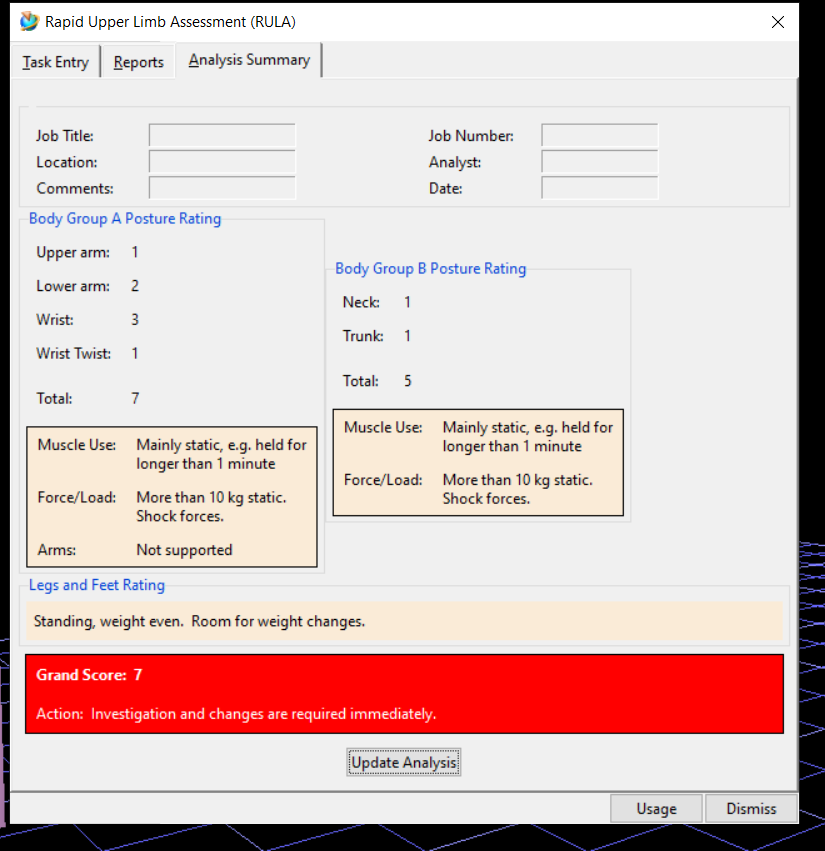
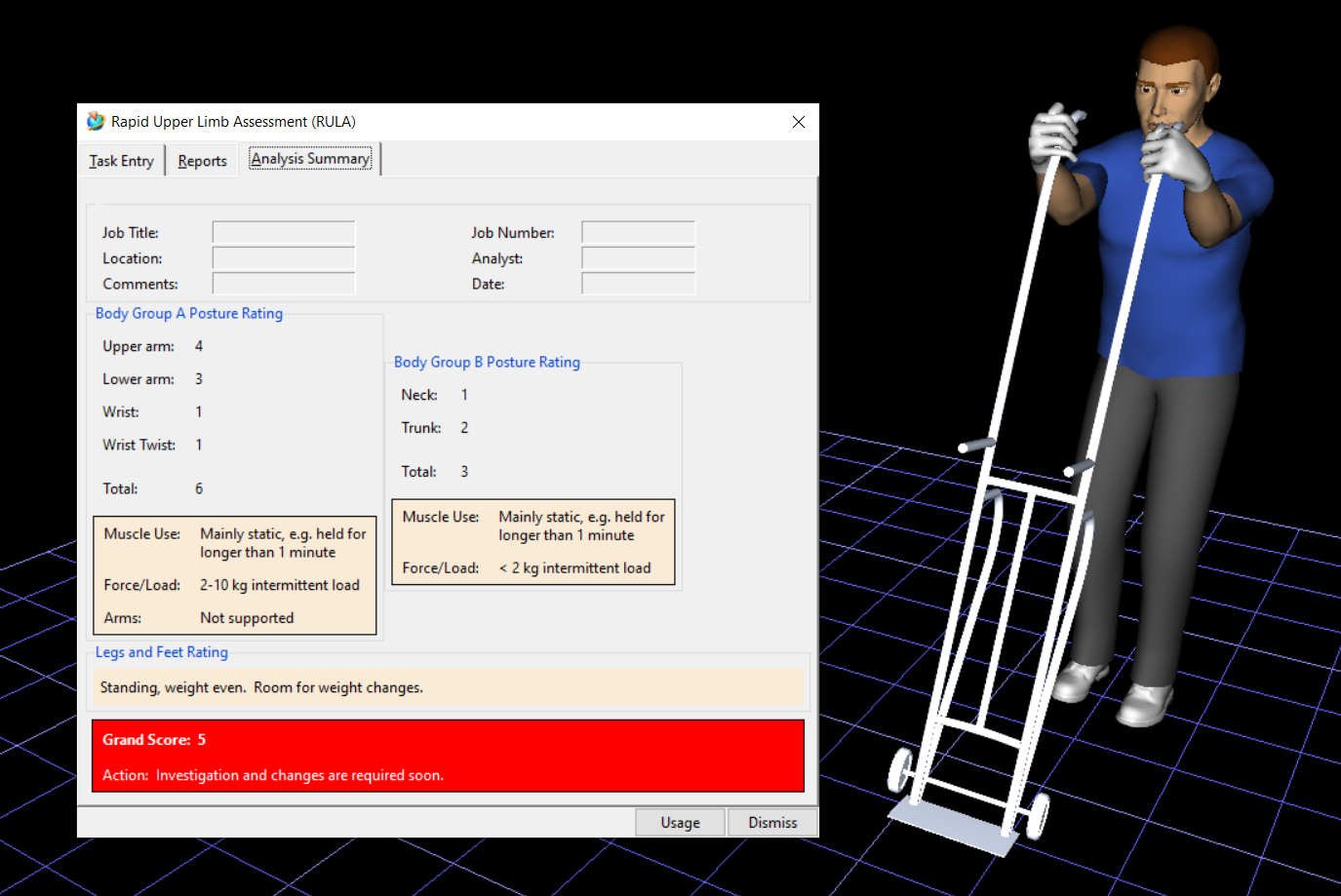
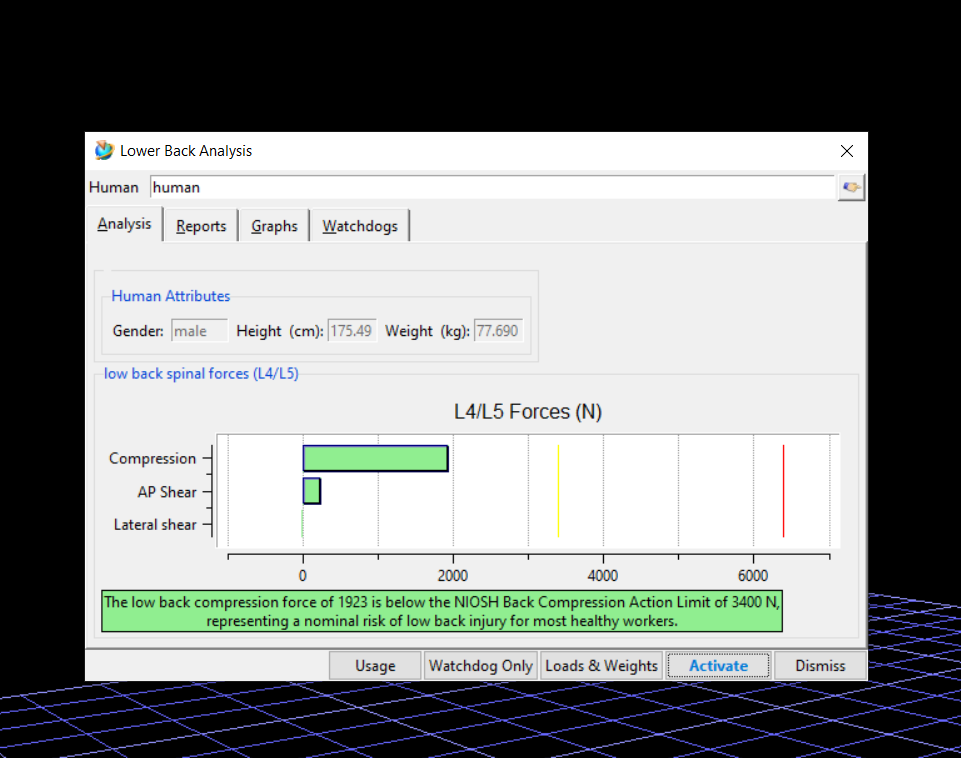
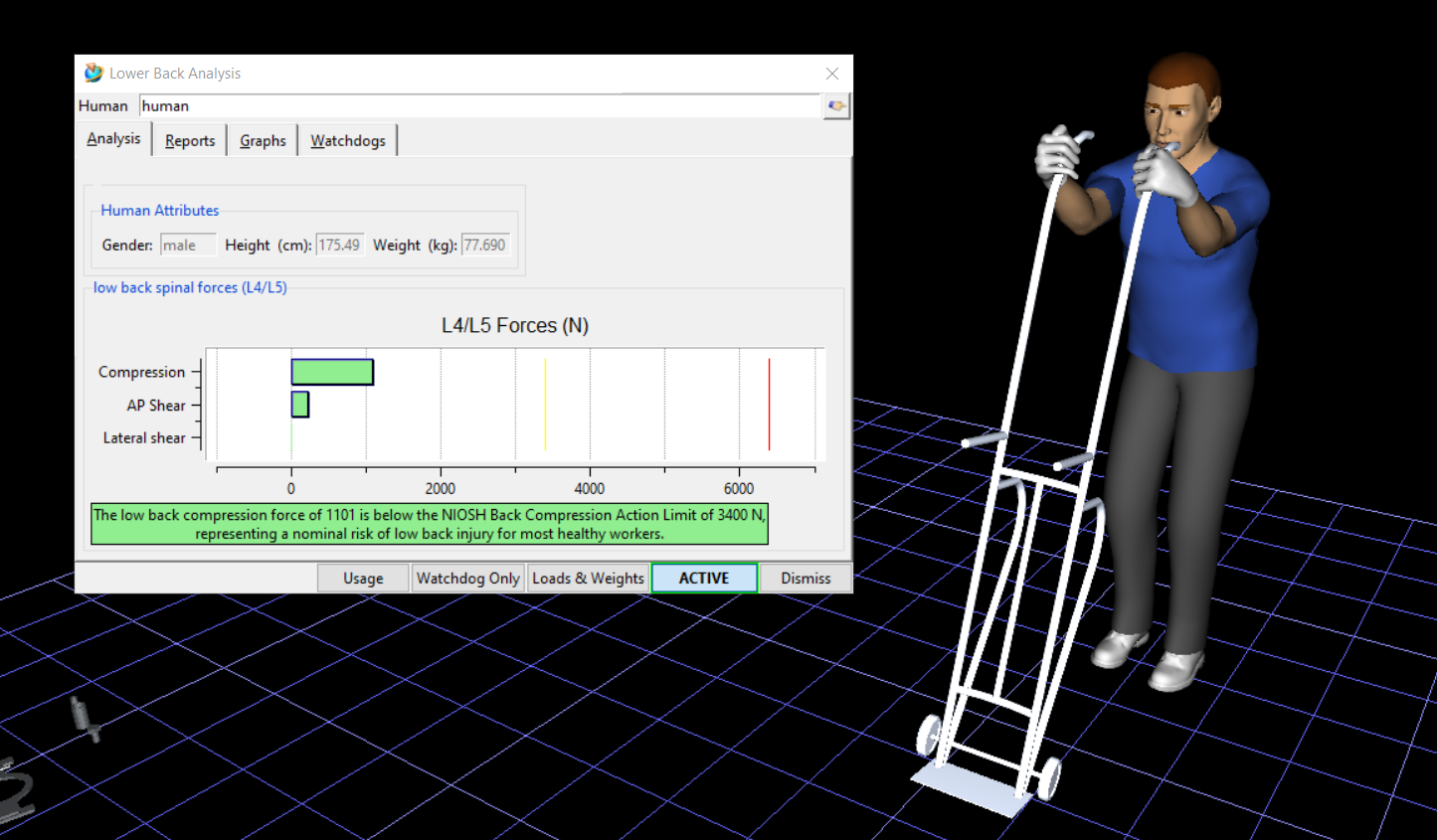
Digital human simulation assessed both the current (AS-IS) and redesigned (TO-BE) workflows. Results show significant improvement across all ergonomic metrics after implementing the trolley solution.
RULA — Rapid Upper Limb Assessment
Lower Back Analysis
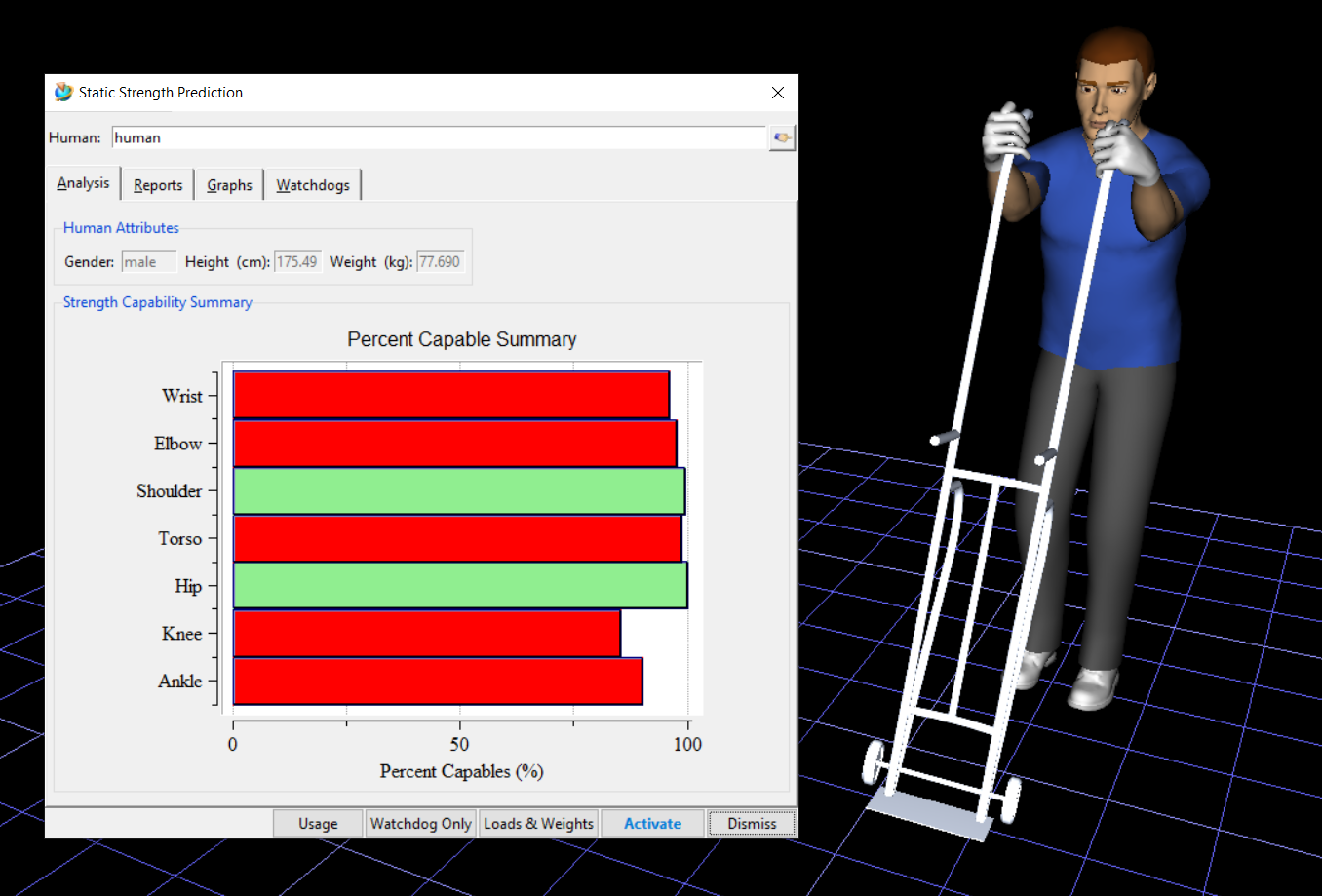
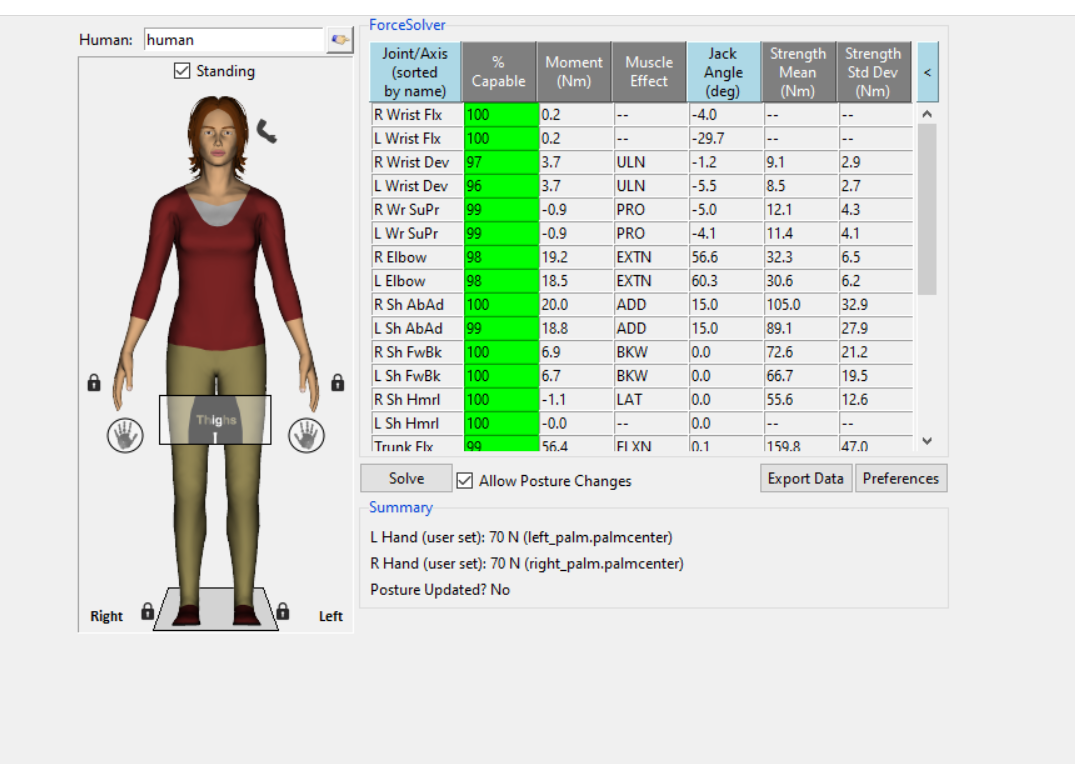
Static Strength & Force Analysis
Lid Design Comparison
A secondary case study compared the original lid against a newly designed alternative. The new lid was lighter in mass and demonstrated improved scores across RULA, NIOSH, and Lower Back analysis — reducing operator load during the attachment and detachment procedure.
Mass Reduction
New lid design is significantly lighter, directly reducing the effort required during tank connection.
Improved RULA Score
New lid scored lower on the RULA assessment, indicating reduced upper limb postural risk.
Lower Back Load
Biomechanical analysis confirmed reduced spinal compression forces with the new lid design.
Team
This project was completed as part of the Design and Virtual Prototyping of Automatic Machines Laboratory at the University of Bologna — a team of 5 mechanical engineering students.